
What Is High-Pressure Drain Jetting and How Does It Work?
When we talk about unblocking or cleaning drains professionally, we're almost always talking about high-pressure water jetting. It's the core of what we do, and it's the reason we can clear blockages that plungers, drain rods and chemical cleaners can't touch.
Here's how it works, what it can deal with, and why it's worth knowing about.
How Does Drain Jetting Work?
A jetting machine pumps water at extremely high pressure — up to 4,000 PSI — through a specialist hose fitted with a precision nozzle. The nozzle has forward-facing jets that cut through blockages and rear-facing jets that propel the hose forward through the pipe while simultaneously scouring the pipe walls clean.
Think of it as a power washer for the inside of your drains. The sheer force of the water breaks apart whatever's causing the blockage and flushes the debris downstream into the main sewer. At the same time, it strips away the grease, scale and residue that's been building up on the pipe walls, leaving them close to their original condition.
The engineer controls the pressure and nozzle type to match the pipe material, diameter and condition. Modern equipment is powerful but precise — it's tough on blockages and gentle on pipes.
What Can Jetting Clear?
Pretty much everything that can block a drain:
- Fat, oil and grease (FOG) — the single biggest cause of blocked drains in domestic properties. Jetting melts through solidified grease and strips it off the pipe walls.
- Wet wipes and sanitary products — the pressurised water breaks apart the compacted mass that forms when wipes snag on pipe joints.
- Tree roots — specialist root-cutting nozzles can slice through roots that have grown into the pipe. Combined with a standard cleaning nozzle, jetting clears the roots and flushes out the debris.
- Silt and sediment — builds up over time, especially in drains with minimal fall or bellied sections.
- Scale and mineral deposits — common in hard water areas and older pipes.
- Toilet paper and organic waste — compacted waste blockages that rods can't reach or shift.
Why Is Jetting Better Than Other Methods?
Compared to drain rods
Drain rods can push through a soft blockage, but they can't clean the pipe. The blockage material is still coating the pipe walls, and it'll build back up quickly. Rods also can't navigate bends easily and can get stuck or even break off inside the pipe. We've retrieved plenty of snapped drain rod heads from blocked drains over the years.
Compared to chemical cleaners
Chemical drain cleaners are corrosive, expensive relative to their effectiveness, and rarely clear a proper blockage. They can damage pipes — especially older clay and cast iron systems common in Leeds and Yorkshire properties. They also pose a safety risk to anyone who subsequently works on the drain. We strongly advise against them.
Compared to plunging
A plunger can shift a simple blockage close to the fixture, but it has no effect on blockages further down the system. And it does nothing to clean the pipe, so the conditions that caused the blockage remain.
When Do You Need Jetting?
Jetting is used in two situations:
Reactive: clearing a blockage
When your drain is blocked and needs clearing, jetting is the go-to method. It's what we use for the vast majority of our drain unblocking call-outs. Fast, effective, and it cleans the pipe at the same time.
Preventative: maintenance cleaning
Regular jetting keeps drains clean and prevents blockages from forming. This is particularly valuable for:
- Properties with a history of recurring blockages
- Older properties with clay pipes that accumulate debris faster
- Properties near trees where root regrowth is an ongoing issue
- Commercial kitchens and restaurants where grease build-up is constant
For most homes, a preventative drain clean every one to two years is a sensible investment. It costs a fraction of an emergency call-out and keeps your drains in peak condition.
What to Expect
When our engineer arrives, they'll assess the situation, identify the best access point, and select the right nozzle and pressure for your pipe type. The jetting itself is surprisingly quick — most domestic blockages are cleared within 30 to 60 minutes. You might hear the hose working through the pipes, and you'll definitely hear the water flowing freely once the blockage is gone.
We leave the area clean and tidy. The debris is flushed downstream into the main sewer where it's designed to go. Your drains are left flowing freely and clean.
If we suspect an underlying structural issue, we'll recommend a CCTV survey to check the pipe condition. But for straightforward blockages, jetting is usually all that's needed.
See It in Action
Want to see what a professional jet clean looks like in practice? Take a look at these real projects:
- Full site jet clean at McDonald's Dinnington — heavy gravel build-up cleared with before-and-after CCTV footage showing the transformation.
- Jet clean and CCTV survey at Starbucks Bradford — complete drainage system verified and cleaned ahead of a new store opening.
Call 0333 577 4242 any time. We're available 24/7 with a fixed fee for domestic drain unblocking and no call-out charges.
Need Drain Cleaning Near You?
We offer professional drain cleaning across the UK. Find your local service.
Related Articles
More practical advice from our drainage engineers.
What to Do When Your Drain Is Blocked (And When to Call a Professional)
Got a blocked drain? Here's what to try yourself, what to avoid, and the point where you should pick up the phone and call in the professionals.
Read articleMaintenanceHow to Prevent Blocked Drains: A Homeowner's Guide
Most blocked drains are preventable. Here's what our engineers wish every homeowner knew about keeping their drains flowing freely, with tips specific to Yorkshire properties.
Read article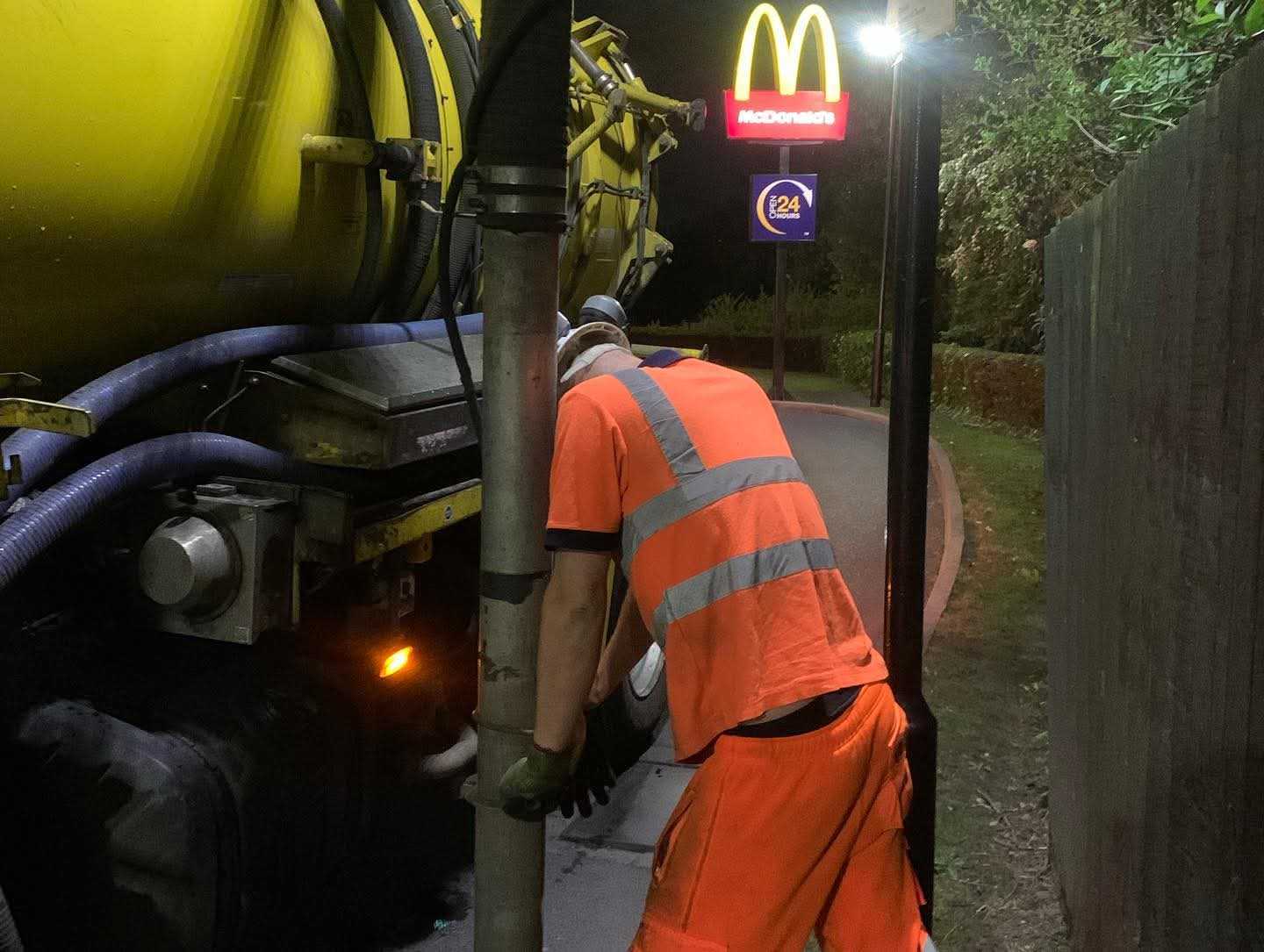
Need Professional Help?
Our experienced drainage engineers are available 24/7. Fixed fee, no hidden charges.