
Drain Rods vs Jetting: Which Is Better for Unblocking Drains?
When a drain blocks, most people want it sorted quickly. But the method used to clear it matters just as much as the speed. Get it wrong and you could make things worse — or only fix the problem temporarily.
What Are Drain Rods?
Drain rods are long, flexible rods (usually about a metre each) that screw together end to end. You feed them into the drain, attach a plunger or corkscrew fitting, and push or twist them through the pipe to physically break up a blockage. You can pick up a basic set from most hardware shops for under £30.
When Drain Rods Work
- Minor blockages close to an access point
- Accessible drains where you can reach the blockage within a few metres
- Temporary fixes while waiting for a professional
- Simple pipework with few bends or junctions
The Risks of DIY Rodding
- Rods can snap or unscrew inside the pipe — now you've got a bigger problem
- You can push the blockage further down the system
- Rods can damage older pipes — cracking joints or pushing sections apart
- You only clear a channel, not the pipe — debris left behind means the blockage returns
What Is High-Pressure Drain Jetting?
High-pressure jetting blasts water through drains at 3,000 to 4,000 PSI. A flexible hose with a specialist nozzle scours the entire internal surface of the pipe. Professional units are mounted on vans — a world apart from a domestic pressure washer.
When Jetting Is Better
- Fat and grease blockages — jetting emulsifies grease completely
- Tree root ingress — cutting nozzles slice through roots
- Full-length pipe cleaning — cleans the entire wall, not just the blockage point
- Long pipe runs — jetting hoses reach 100+ metres
- Recurring blockages — removes underlying build-up that rods leave behind
Why Professionals Prefer Jetting
Rods clear a blockage. Jetting cleans a drain. When we jet a drain, we restore the pipe to something close to its original diameter. Combined with a CCTV survey, it gives a complete picture of your drainage health.
Cost Comparison
A set of drain rods costs £20–£50. Professional jetting starts from around £150–£250 for a standard domestic blockage. But professional jetting gives you a thorough clean, an experienced diagnosis, no risk of damage, and a much lower chance of the blockage returning.
And if DIY rodding goes wrong — a snapped rod, a cracked joint, a blockage pushed into the main sewer — the repair bill dwarfs what jetting would have cost.
Which Should You Choose?
If you can see the blockage within arm's reach and it's clearly surface debris, careful rodding might work. For anything beyond that, jetting is safer, more effective, and more economical long-term.
Need a blocked drain cleared? Call UK Drainage Services on 0333 577 4242 for fast, professional drain unblocking.
Need Unblocking Near You?
We offer professional drain unblocking across the UK. Find your local service.
Related Articles
More practical advice from our drainage engineers.
What Is High-Pressure Drain Jetting and How Does It Work?
High-pressure jetting is the most effective way to clear stubborn blockages and clean drain pipes. Here's how it works and when you need it.
Read articleGuidesHow Much Does Drain Unblocking Cost in 2026?
What does drain unblocking actually cost? We break down real pricing — our fixed fee, industry averages, and what drives the price up. No vague ranges, just honest numbers.
Read articleMaintenanceHow to Prevent Blocked Drains: A Homeowner's Guide
Most blocked drains are preventable. Here's what our engineers wish every homeowner knew about keeping their drains flowing freely, with tips specific to Yorkshire properties.
Read article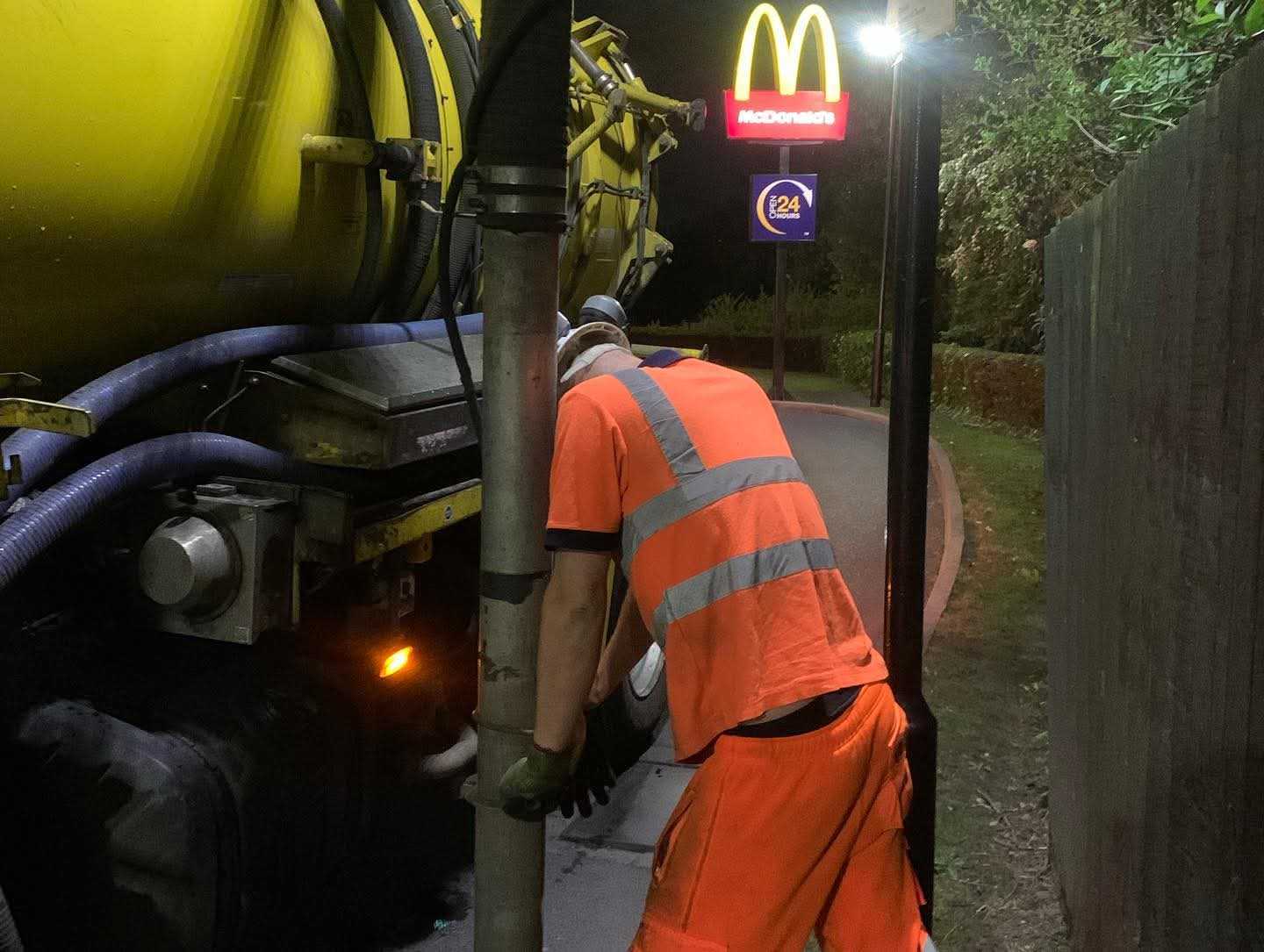
Need Professional Help?
Our experienced drainage engineers are available 24/7. Fixed fee, no hidden charges.